



The Bank prioritizes its loan portfolio across high greenhouse gas-emitting sectors to develop the Sector Decarbonization Strategy and establish pathways for reducing and managing greenhouse gas (GHG) emissions in each industry in alignment with the Paris Agreement and Thailand's national targets. The strategy takes into consideration three key factors, as follows:
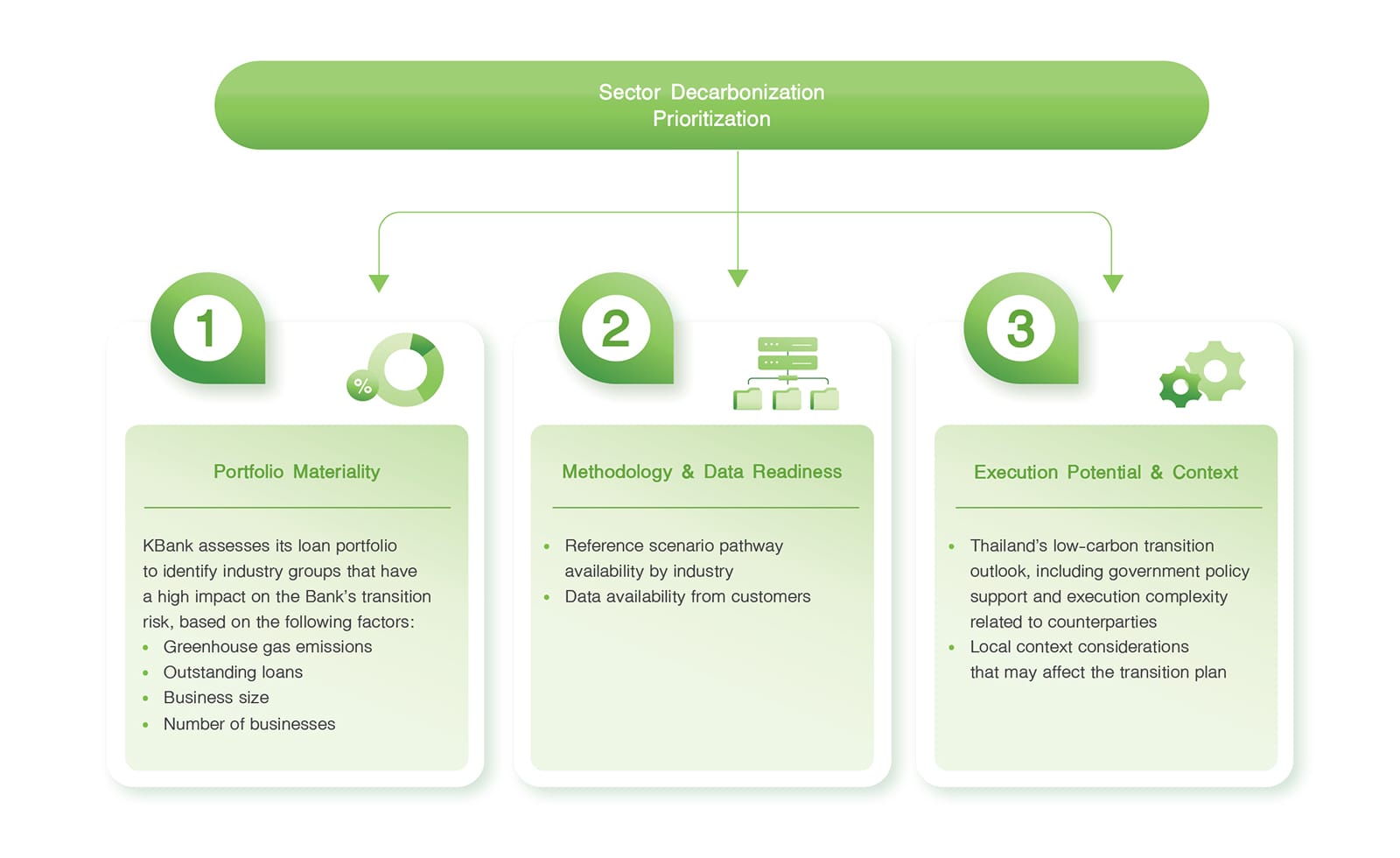
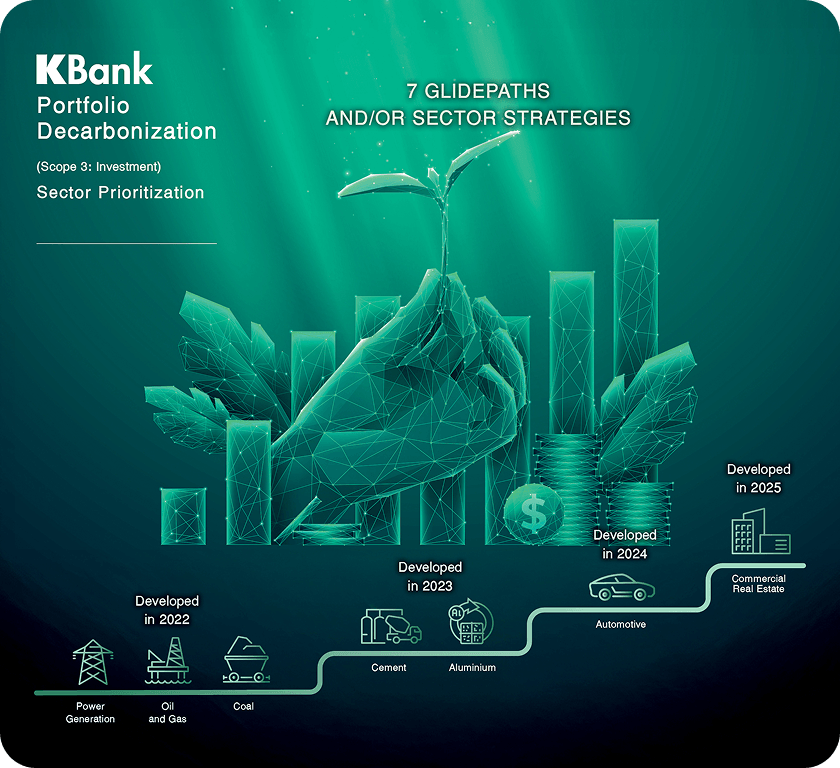
Based on the prioritization using the above key factors, the Bank has established a Sector Decarbonization Strategy for seven high greenhouse gas-emitting sector :
These sectors are characterized by high levels of GHG emissions, reference methodology readiness, essential data for emissions calculation, and their strong potential to drive the transition.
KBank is committed to supporting the transition to a net-zero economy in line with its Net Zero Commitment and Thailand’s aspiration of achieving net zero emissions by 2050. The Bank has developed a Power Generation Glidepath to manage its credit portfolio in the power generation sector, support customers in their energy transition, and manage transition risks arising from climate change.
 Net Zero Target
|
 Key Metric
|
 Client GHG Emission Scope
|
|---|---|---|
| 2050 | Emission Intensity: tCO2e/GWh | Scope 1 and Scope 2 |
 The power generation sector is one of the highest greenhouse gas-emitting sectors and plays a critical role in the country's energy transition. Thailand is progressively increasing the share of electricity generated from renewable and low-carbon energy sources while reducing its reliance on fossil fuel-based power generation, in line with the country's Power Development Plan (PDP) and national climate action framework.

Power Generation
 In Scope

Transmission & Distribution
 Out of Scope

Storage
Out of Scope

Trade & Retail
Out of Scope
The scope covers outstanding loans in the power generation sector within the credit portfolio, comprising Independent Power Producers (IPPs), Small Power Producers (SPPs), and Very Small Power Producers (VSPPs).
The Bank has set a Net-Zero Target for its credit portfolio in the power generation sector by 2050. The Bank aims to continuously reduce the emission intensity of its credit portfolio by increasing support for power generation from renewable and low-carbon energy sources, while reducing reliance on fossil fuel-based power generation over the long term, in line with the country's PDP. The glidepath sets out the long-term trajectory for reducing the emission intensity of the credit portfolio in the power generation sector.
Metric and Reference Pathway
| Metric | Emission Intensity (tCO2e/GWh) |
|---|---|
| Client GHG Emissions Scope | Scope 1 and Scope 2 |
| Value Chain Coverage | Power Generation |
| Reference Pathway | An energy transition pathway aligned with Thailand’s national context and international pathways towards net-zero emissions and the goal of limiting global warming to 1.5°C |
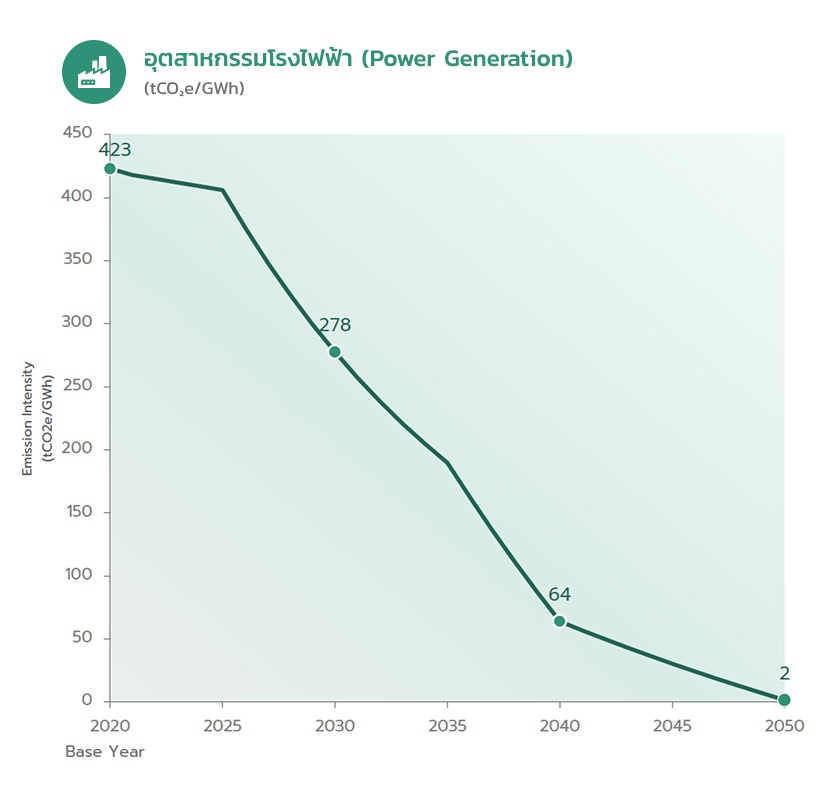
The Bank has developed its decarbonization strategy and emissions intensity reduction pathway with reference to Thailand’s energy transition direction, the country’s PDP, national GHG reduction targets, and international approaches to decarbonization in the power sector. The Bank may periodically review and update its strategy and pathway to reflect future changes in government policies, energy plans, technologies, and relevant data.
The Bank has established a credit portfolio management approach for the power generation sector to support customers’ energy transition efforts and facilitate the long-term decarbonization of the sector.

The Bank places emphasis on managing its power generation credit portfolio by increasing support for clean and low-carbon energy generation while gradually reducing reliance on fossil fuel-based power generation over the long term. This approach aims to support the energy transition and reduce the GHG emissions intensity of the Bank’s lending portfolio in line with the established glidepath. Key actions include :

| Power Plant Type | Approach |
|---|---|
 Coal-fired Power Plant
|
|
 Natural Gas-fired Power Plant
|
|
 Renewable Power Plant
|
|

KASIKORNBANK and companies within the KASIKORNBANK FINANCIAL CONGLOMERATE support customers in the power generation sector in their energy transition through a range of financial products and services, as well as non-financial support services. These offerings are designed to facilitate investments in clean energy, low-carbon technologies, and GHG emissions reduction initiatives, thereby facilitating the long-term transition of the power generation sector. Key services include :
The Bank supports its customers’ transition through a comprehensive range of financial products and services across lending, investment, and capital markets, aimed at facilitating investments in clean energy, low-carbon technologies, and projects aligned with the transition to a low-carbon economy. These include :
KASIKORNBANK and companies within the KASIKORNBANK FINANCIAL CONGLOMERATE support customers in planning and executing their transition towards a low-carbon economy through advisory services, supporting tools, and knowledge development initiatives. These efforts are designed to strengthen customers’ capabilities in achieving their climate goals. Key services include :

The Bank places high importance on continuous engagement with clients in the power generation sector to support their energy transition and GHG emissions reduction efforts in alignment with the clients’ objectives, the Bank’s targets, and the country’s transition pathways.
The Bank’s client engagement approach includes :
Information obtained from these discussions and monitoring activities will be used to support climate risk management, credit underwriting, and tracking the alignment of its credit portfolio with established GHG emissions reduction targets and glidepath.

The Bank continuously monitors the performance of its credit portfolio in the power generation sector to assess its alignment with the established GHG emissions reduction targets and glidepath. The Bank may review and update its approach as necessary to remain aligned with future changes in government policies, energy development plans, technological advancements, and other relevant data.

